.png)

.png)
Why Roofing King Uses Pressure-Treated Plywood Instead of Chipboard
- Roofing King

- May 21
- 2 min read
When it comes to protecting your home, what’s under your shingles matters just as much as what you see on top. Roof decking is the foundation of your entire roofing system, and using the wrong material can lead to premature failure, costly repairs, and ongoing maintenance issues.
That is exactly why Roofing King only uses pressure-treated plywood—and avoids chipboard—on our roofing projects.
Understanding the Difference: Pressure-Treated Plywood vs. Chipboard
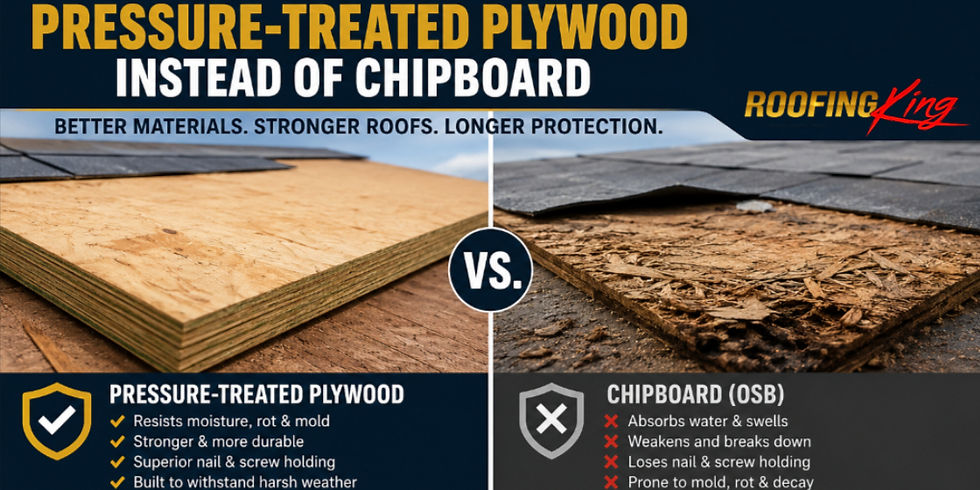
Pressure-treated plywood is constructed from multiple layers of solid wood veneer and treated with preservatives that protect against moisture, rot, fungi, and insects. It is specifically designed to perform in environments where water exposure is a concern.
Chipboard (often referred to as OSB or particle board) is made from compressed wood chips bonded with resin. While it may be less expensive upfront, it lacks the durability required for long-term roofing performance—especially in areas with harsh weather conditions.
Superior Moisture Resistance Means a Longer-Lasting Roof
Roofs are constantly exposed to moisture from rain, snow, ice dams, and condensation. Even minor leaks can compromise the roof deck over time.
Pressure-treated plywood:
Resists moisture absorption
Prevents rot and mold growth
Maintains strength even after exposure
Chipboard, on the other hand:
Absorbs water quickly
Swells and weakens
Breaks down once moisture penetrates
This is one of the most common causes of soft spots and structural damage we find during roof inspections.
Strength You Can Count On
Your roof decking must support shingles, underlayment, snow loads, and foot traffic during installation and repairs. Pressure-treated plywood provides:
Better structural integrity
Stronger nail and fastener holding power
Reduced risk of loose shingles over time
Chipboard loses its holding strength once it becomes damp, increasing the risk of roof failure.
Built for New York Weather
In Central and Upstate New York, roofs face extreme conditions including freeze-thaw cycles, heavy snowfall, and high humidity. Pressure-treated plywood is engineered to withstand these challenges.
Chipboard commonly fails in these environments due to trapped moisture expanding during freezing temperatures, causing swelling and deterioration beneath the roofing system.
Why Roofing King Chooses the Best Materials—Every Time
At Roofing King, we don’t cut corners with materials. We believe that a quality roof starts with a strong foundation, which is why we consistently choose pressure-treated plywood for roof decking and structural repairs.
Our commitment to using the best materials means:
Longer-lasting roofs
Fewer future repairs
Better protection for your home
Greater value for your investment
We build roofs the right way—because your home deserves it.
Invest in Quality, Not Shortcuts
Choosing pressure-treated plywood over chipboard is not about spending more—it’s about spending smarter. The right materials today prevent expensive problems tomorrow.
If you’re considering a roof repair or replacement, trust Roofing King to use proven materials and professional standards that stand the test of time.
Contact Roofing King today for a free roof inspection and estimate—and see the difference quality materials make.
If you’d like, I can:
Add local SEO keywords (city-specific)
Create a meta title & meta description
Convert this into a Facebook or Google Business post
Write a short companion script for a website video
Just let me know.

Comments